
Lab-Grown Diamond vs Moissanite: Which Is Better?
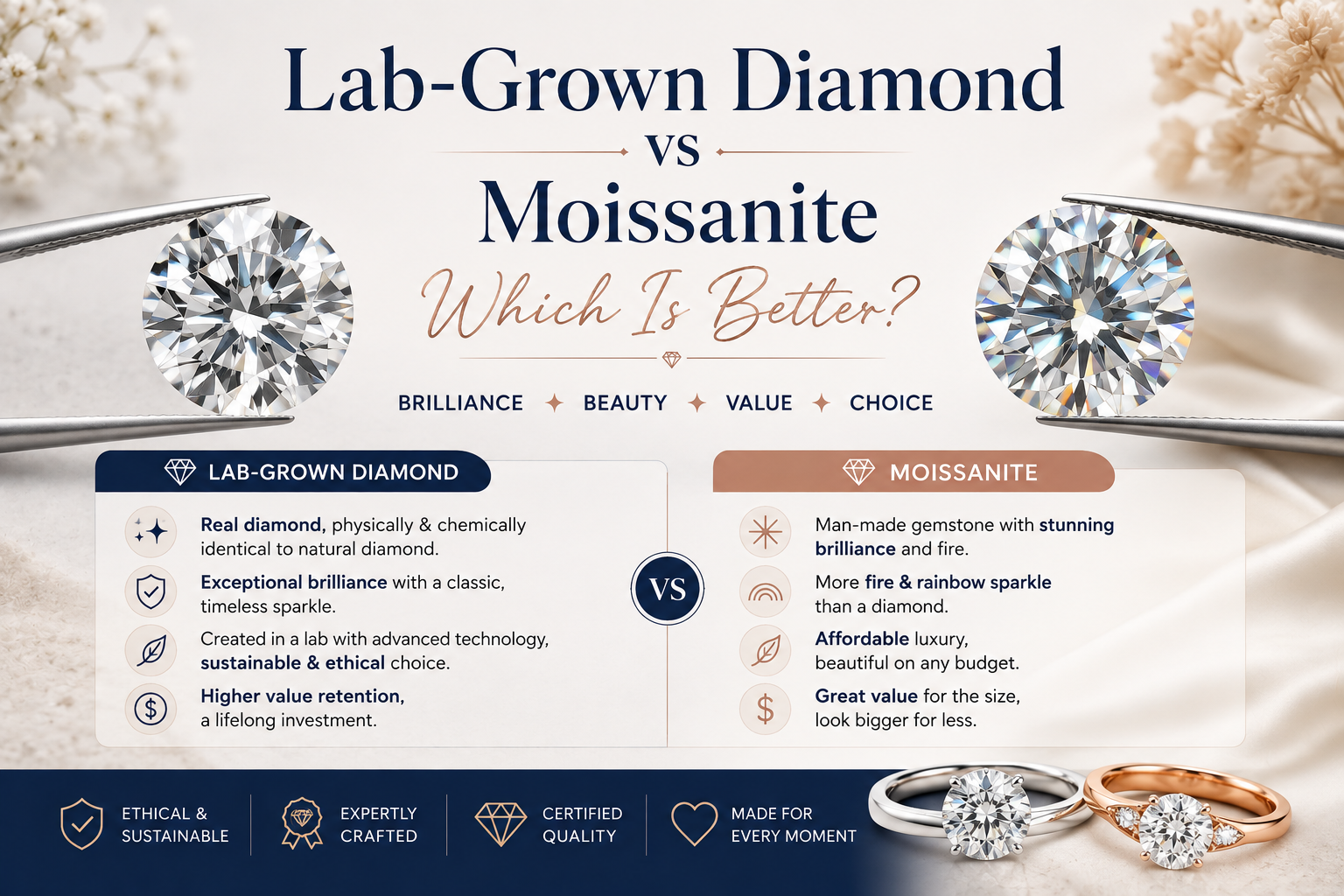
When choosing a beautiful stone for an engagement ring, wedding ring or fine jewellery, two popular options are lab-grown diamonds and moissanite.
Both can offer impressive sparkle and excellent durability, but they are not the same gemstone. So, which is better: lab-grown diamond or moissanite?
The answer depends on what you value most—diamond authenticity, appearance, durability, budget or long-term significance.
At Audrey’s Diamond, we believe customers should understand the differences before making an important jewellery purchase.
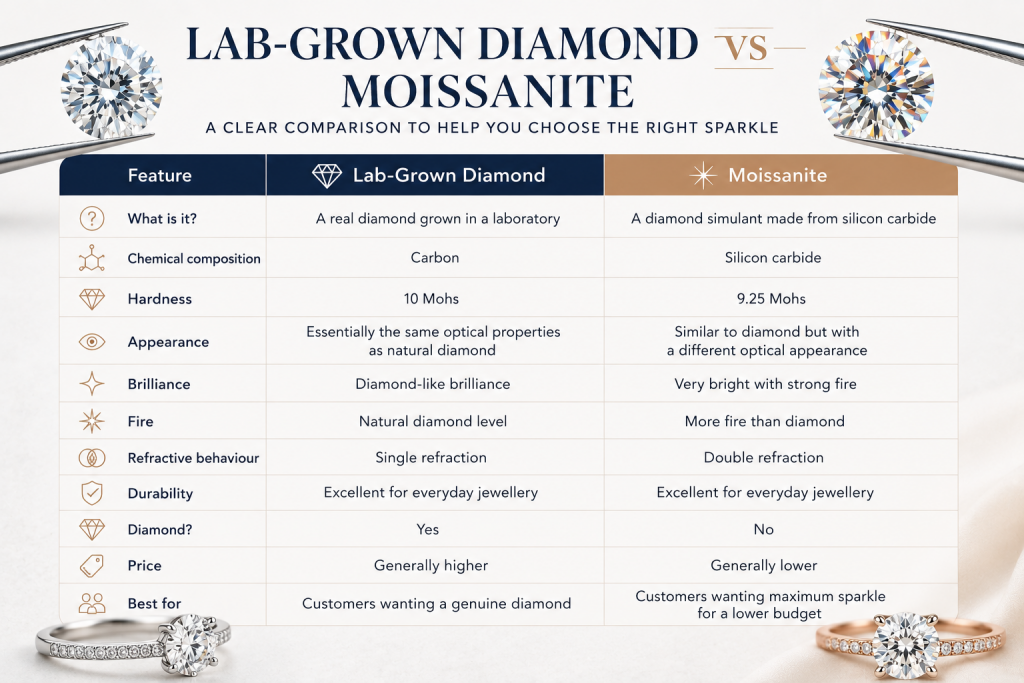
Lab-Grown Diamond vs Moissanite at a Glance
Our Recommendation
At Audrey’s Diamond, we believe choosing jewellery should be an enjoyable and informed experience.
Whether you are searching for an engagement ring, wedding ring, diamond necklace, earrings or another special piece, understanding the difference between lab-grown diamonds and moissanite can help you choose a stone that matches your style, budget and expectations.
Explore the beauty of lab-grown diamonds and find a piece designed to celebrate your special moment.
What Is a Lab-Grown Diamond?
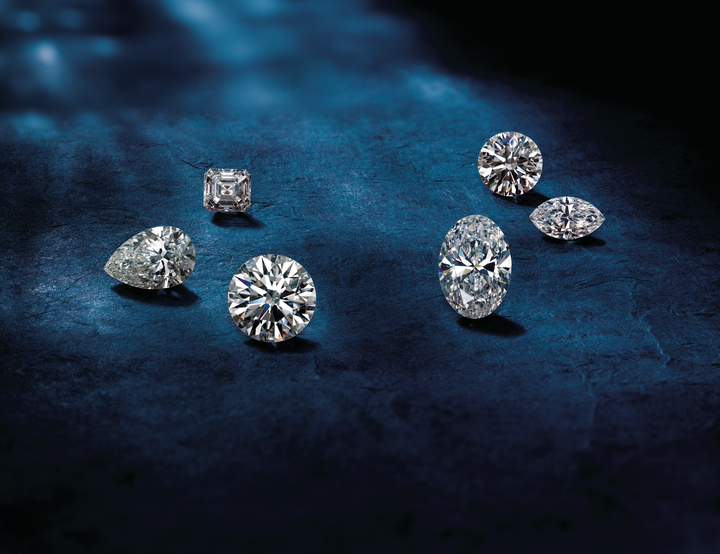
A lab-grown diamond is a diamond created using controlled laboratory technology rather than being formed naturally deep inside the Earth.
The two primary growth methods are CVD (Chemical Vapor Deposition) and HPHT (High Pressure High Temperature).
Although the origin is different, a lab-grown diamond has the same basic crystal structure and essentially the same chemical, physical and optical properties as a natural diamond. Professional gemological laboratories can distinguish laboratory-grown diamonds from natural diamonds using advanced testing equipment.
This means that when you choose a lab-grown diamond, you are choosing a real diamond, not a diamond imitation.
What Is Moissanite?
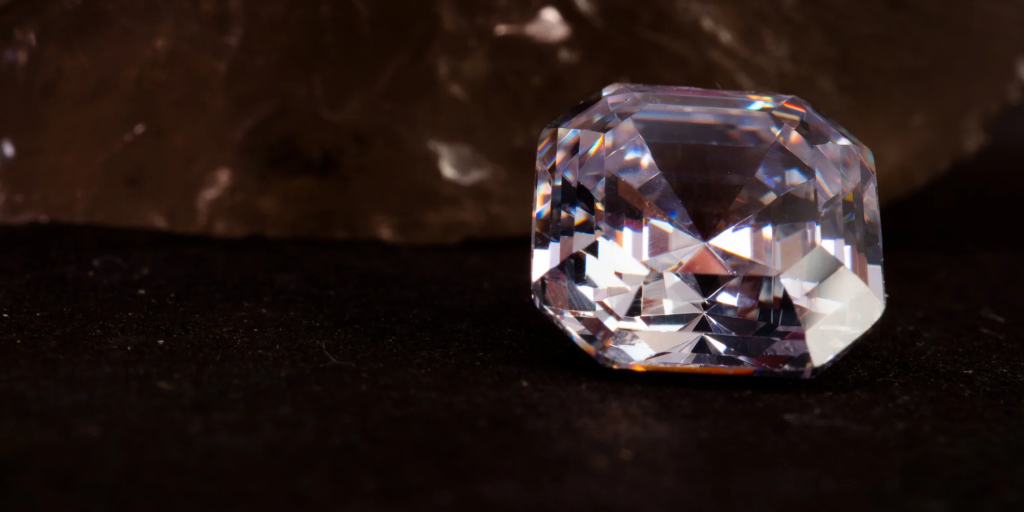
Moissanite is a gemstone made from silicon carbide (SiC). It is popular because it can resemble diamond while offering exceptional brilliance and durability at a generally lower price.
Moissanite has a hardness of approximately 9.25 on the Mohs scale, compared with diamond’s hardness of 10. This makes it a durable choice for jewellery and everyday wear.
However, moissanite is not a diamond.
One of its most noticeable characteristics is its strong fire, meaning colourful flashes of light. GIA notes that moissanite has more than twice the fire of diamond and can show slightly more brilliance. Some people love this intense sparkle, while others prefer the more classic appearance of diamond.
Lab-Grown Diamond vs Moissanite: Appearance
At first glance, both stones can look beautiful and highly brilliant.
However, they behave differently under light.
A lab-grown diamond has the same optical characteristics as a natural diamond. Moissanite has double refraction, meaning light travels through the stone differently and facet edges can sometimes appear doubled when viewed closely.
Moissanite also produces stronger colourful flashes of fire.
Which looks more like a traditional diamond?
If your priority is the classic diamond appearance, a lab-grown diamond is the closer choice because it is a diamond.
If you prefer intense sparkle and colourful flashes, you may enjoy moissanite.
Which Is More Durable?
Both are excellent choices for jewellery.
Diamond has a Mohs hardness of 10, making it the hardest naturally occurring mineral. Moissanite has a hardness of approximately 9.25, which is still extremely high.
For an engagement ring or wedding ring that will be worn regularly, both can provide excellent durability.
However, if maximum hardness is your priority, lab-grown diamond has the advantage.
Which Has More Sparkle?
This is where the comparison becomes interesting.
Moissanite is famous for its intense fire and can produce more colourful flashes than diamond. GIA reports that moissanite has more than twice the fire of diamond.
Some customers love this dramatic sparkle.
Others prefer the balanced brilliance and more traditional fire of a diamond.
Therefore:
More colourful fire → Moissanite
Classic diamond sparkle → Lab-Grown Diamond
Which Is More Affordable?
For customers working with a specific budget, moissanite can offer a larger-looking centre stone for less money.
Lab-grown diamonds can also be significantly more affordable than comparable natural diamonds, while still being genuine diamonds.
This makes lab-grown diamonds an attractive option for customers who want the diamond experience without choosing a natural diamond.
The exact price depends on factors such as:
- Carat weight
- Cut
- Colour
- Clarity
- Shape
- Certification
- Metal used in the jewellery
- Brand and craftsmanship
Lab-Grown Diamond or Moissanite for an Engagement Ring?
For an engagement ring, the decision often comes down to what the ring represents to you.
Choose a Lab-Grown Diamond if:
- You specifically want a real diamond
- You want the classic diamond appearance
- You want maximum hardness
- You want diamond grading characteristics such as cut, colour and clarity
- You want a modern alternative to a natural diamond
- The symbolism of a genuine diamond is important to you
Choose Moissanite if:
- You want to spend less on the centre stone
- You love intense colourful sparkle
- You want a very durable gemstone
- You prefer a larger-looking stone within a lower budget
- You are happy choosing a gemstone that is not diamond
Is Lab-Grown Diamond Better Than Moissanite?
There is no single answer for every customer.
However, if the question is which is better as a diamond alternative, lab-grown diamond is the closer choice because it is actually diamond.
A lab-grown diamond has essentially the same chemical, physical and optical properties as a natural diamond. Moissanite is a different gemstone that is designed to resemble diamond.
So if your priority is authenticity, traditional diamond appearance and maximum hardness, lab-grown diamond is the better choice.
If your priority is maximum sparkle at a lower budget, moissanite can be an excellent option.
Lab-Grown Diamond vs Moissanite: Our Verdict
| If your priority is… | Better choice |
|---|---|
| Genuine diamond | Lab-Grown Diamond |
| Classic diamond appearance | Lab-Grown Diamond |
| Maximum hardness | Lab-Grown Diamond |
| Intense colourful fire | Moissanite |
| Lower centre-stone budget | Moissanite |
| Larger-looking stone for the budget | Moissanite |
| Engagement ring with diamond symbolism | Lab-Grown Diamond |
| Everyday durability | Both are excellent |
Our Recommendation
For customers who want a genuine diamond with the beauty and characteristics of a traditional diamond, we recommend a lab-grown diamond.
For customers whose main goal is exceptional sparkle at a lower price, moissanite is worth considering.
The most important thing is to understand exactly what you are purchasing. A lab-grown diamond and a moissanite may look similar at a glance, but they are fundamentally different gemstones.
Discover Lab-Grown Diamond Jewellery at Audrey’s Diamond
At Audrey’s Diamond, we believe choosing jewellery should be an enjoyable and informed experience.
Whether you are searching for an engagement ring, wedding ring, diamond necklace, earrings or another special piece, understanding the difference between lab-grown diamonds and moissanite can help you choose a stone that matches your style, budget and expectations.
Explore the beauty of lab-grown diamonds and find a piece designed to celebrate your special moment.